




Blogs
Step-by-Step Process to Source from a Trusted Car Sponge Supplier
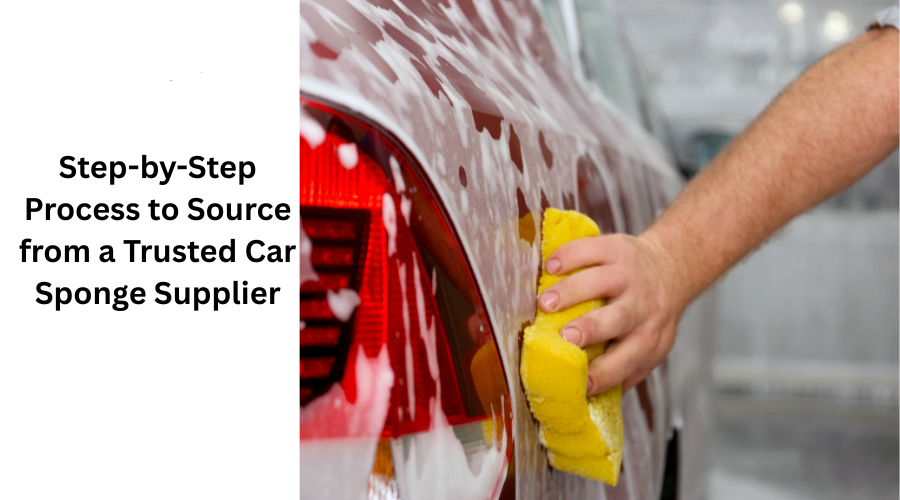
Many detailers run into sponge issues when the job is 90% complete. And then new sponge starts shedding foam particles all over a freshly polished hood. Or worse, a batch of retail sponges you sold comes back as they got rock hard after one use with a wheel cleaner . These problems hurt your reputation more than they hurt your margins and margins are already tight enough.
The single weakest link in many detailing businesses and car care retail operations isn’t skill or marketing, it’s the high-quality polyurethane and foam materials inside the sponges you buy. Material integrity of the sponge dictates durability, chemical resistance, water retention, and the final result of a job. And this also impacts whether your customer trusts you again. That’s why sourcing the right one isn’t a purchasing task; it’s a business survival skill.
Here is a repeatable, seven-step process to lock down a trusted foam manufacturer — so you can stop fighting your tools and start scaling your business.
Step 1: Nail Your Material Spec Before a
Most sourcing troubles begin when you submit a vague inquiry. You say “I need car sponges,” and a sponge supplier ships you cheap polyether foam that disintegrates prematurely during use. In the end, you lose money and customer confidence.
The correct strategy is to exactly define your high-quality polyurethane and foam materials requirements before contact, so that it leaves no room for interpretation. For automotive applications, the conversation starts with two critical families:
Polyurethane (PU) foam: This foam consists of a controlled cell structure, excellent tensile strength, and chemical compatibility. The material is excellent for wash sponges and applicator pads that must survive repeated exposure to soaps, APC, and wheel acids.
Polyethylene (PE) foam or reticulated polyether: Often lighter and more cost-effective, but has significantly different chemical resistance profiles. Splendid for interior dusting pads, but a terrible choice for a tire dressing sponge.
Before you place a bulk order it is important to put these specifics in writing:
Cell type: Open-cell for absorption, and closed-cell structure for chemical resistance and durability.
Density (PPI — pores per inch): A wash sponge has density between 30 and 50 PPI. Higher PPI means softer touch but less structured scrub. In contrast, lower PPI gives stiffer cutting action and a rougher scrub.
Chemical compatibility: Can the sponge survive a pH 2–14 acidity range or not? Will it face petroleum-based solvents? If yes, PU ester may be necessary over PU ether.
Compression set: How quickly must the sponge recover its shape after being clamped in a wash mitt? This impacts perceived quality dramatically.
Water retention target: For auto detailers, this spec matters a lot. A sponge that holds 20x its weight in water is will perform well. One that floats dry is a return.
Frame your requirement as a one-paragraph spec sheet. You are not a sponge engineer, but you know your use case better than any factory. Communicate the outcome you need, and let the supplier’s material science team fill in the technical gaps. If they won’t, you’ve already learned something valuable about them.
Step 2: Find Suppliers Worth Your Time
Your job is to separate genuine wholesale automotive sponge manufacturers from trading companies that sell products with zero material traceability.
Here’s where we send you to look:
B2B trade directories
Global online Platforms like Alibaba Gold Supplier (with on-site check verification), and Made-in-China.com allow you to filter by manufacturing capability, not just product listings. Shortlist by looking at the “Manufacturer/Factory” badges and years in operation. Five or more is a good threshold.
Industry trade show exhibitor lists
These attract serious automotive material suppliers. Pull the exhibitor list from the most recent show. Filter by “Car Care Accessories” or “Foam Products,” and you’ll find factories that supply premium products that are proven to perform.
Niche car-care sourcing groups
LinkedIn groups, and auto detailing business forums often share supplier experiences with the sponges. These are readily available testimonials you won’t find anywhere else. Word-of-mouth vetting is priceles
Step 3: Examine Credentials
Before you request a single sample, you need to verify documents. This is the step that separates a top grade foam manufacturer from an amateur one, who only increases business risk.
Ask for, and verify:
ISO 9001:2015 certificate: This demonstrates a quality management system. Look for the scope of certification — it should explicitly include foam manufacturing, not just general trading.
Material Safety Data Sheets (MSDS/SDS): This is a vital certification for any cleaning product that is used with chemicals.
RoHS and REACH compliance statements: These are essential if you operate in the EU region or a market with strict regulations.
Third-party lab test reports for material composition: A supplier serious about high-quality polyurethane and foam materials will have SGS, TÜV, or Intertek reports for foam density, tensile strength, and chemical resistance. Ask for batch-specific reports and not a report for the individual unit.
Business license and export registration
A red flag you must not ignore: hesitation. A legitimate factory dealing with international B2B buyers has these documents on file. If they stall, deflect, or claim “confidentiality,” you are not dealing with a manufacturer — you’re likely dealing with an intermediary who has no real control over material composition. And your business cannot afford that gamble.
Step 4: Run a Sample Test That Actually Predicts Field Failure
Don’t skip this step. Ever. Order production samples, then run a suite of tests simulating real world usage conditions:
Submersion durability test: Soak the sponge in your shop’s actual car shampoo solution for 24 hours. Squeeze and release 50 times. Check for foam breakdown, dye bleeding, or cell collapse.
Chemical resistance shock test: Apply undiluted all-purpose cleaner (pH 12+) to one edge, and a high-acid wheel cleaner to another. Wait 10 minutes. After that rinse, and inspect the sponge for melting, hardening, or a change in the surface texture. If the foam becomes damaged, it is not a good candidate for use in a customer’s garage with zero dilution discipline.
Friction shedding assessment: This test is for assessing the service life. Rub the wet sponge 100 times across a microfibre cloth under firm hand pressure. Inspect the cloth for foam particles. Shedding equals contamination on a client’s vehicle which is unacceptable.
Compression recovery: Fully compress the sponge flat for 1 hour. Release and measure how quickly it returns to original thickness. If it does not return to its shape then that is a clear indicator that the sponge is of B-grade quality.
Water retention measurement: This involves weighing, drying, submerging, followed by calculation of the absorbency ratio. Once you obtain this figure you can proudly publish this on your retail packaging.
Step 5: Contract Terms Negotiation
Not every detailing business has the liquid cash to place a 5,000-unit order of a single sponge. Fortunately, wholesale automotive sponge suppliers are increasingly flexible — if you know how to ask. Your negotiation should cover three aspects:
MOQs
Tiered pricing
Payment terms
To close the deal in your favor, present yourself as a growing, serious partner and not a spot deal buyer. You’re not asking for charity. You’re structuring a scalable relationship rooted in consistent demand for their products.
Step 6: Lock Down Logistics So Your Margins Survive the Journey
You’ve found the right material. and negotiated a workable deal. Now, you have to tackle a hidden margin killer: freight and packaging.
A bulk shipment of bulk car detailing sponges is surprisingly light but volumetrically huge. You must talk incoterms (international commercial terms) with your supplier.
FOB (Free On Board): You control the freight forwarder and shipping. This helps you save on the markup.
CIF (Cost, Insurance, Freight): The supplier handles shipping to your port.
DDP (Delivered Duty Paid): The supplier manages everything, including customs. This arrangement is convenient for first-time importers, even if it is a bit heavy on the budget.
Foam-specific packaging matters because it saves freight space. That is why you should insist on vacuum-sealed or compression-packed sponge blocks to reduce volume. Your sample test from Step 4 must include a compressed storage test.
Conclusion
You cannot build a premium detailing reputation or a reliable car-care retail brand on inconsistent material. The sponges that touch your customers’ vehicles — or sit on their shelves — are silent ambassadors of your commitment to quality.
Sourcing of quality car sponges from a trustworthy partner is a deliberate, multi-step diligence that pays out in reduced returns and a supply chain you can rely on. If you follow the seven steps explained in the blog, you will have access to quality sponge batches without any encountering any hassles.
The time you invest now in vetting, and testing will multiply back as saved reputation and stronger margins. And that’s not just advice — it’s the operational foundation of every detailing business and retail brand that lasts.
FAQs
Where to find suppliers of car sponge?
Look to wholesale auto care distributors and global B2B marketplaces. They stock bulk sponges for garages, retailers, and detailing shops.
What types of sponges do car suppliers offer?
Sponge suppliers provide a broad lineup consisting of soft wash sponges for delicate paint. Another variant is of heavy‑duty scrubbers for getting rid of tough grime, and microfiber blends for professional detailing.
Are all car sponges the same?
No. Material, density, and texture directly affect cleaning performance and paint safety. Smart buyers choose sponges by use case.
Featured Articles
Summary Selecting car sponges in bulk requires all the information we will provide in this blog. It s
READ FULLHighlights The first question to ask when choosing a supplier of car
READ FULLSummary Car owners and automobile washing businesses often face a problem when cleaning cars. That
READ FULL